My Background

I hear a problem before I can explain it. That’s not a gift; it’s a skill I built twice over — once at the piano, once behind a mixing desk.
Adult players usually get stuck for one reason: they practice faithfully but can’t accurately hear what their own playing is doing. Weeks pass, the same phrase stays stiff, and no amount of repetition fixes it because the feedback loop is broken. That is the specific thing I’m good at. When something sounds wrong to you but you can’t say why, I can usually name it.
“Obviously, the broader his experience of music in many fields, the more the teacher will have to bring to every piano lesson.”
Angela Diller, author, The Splendor of Music
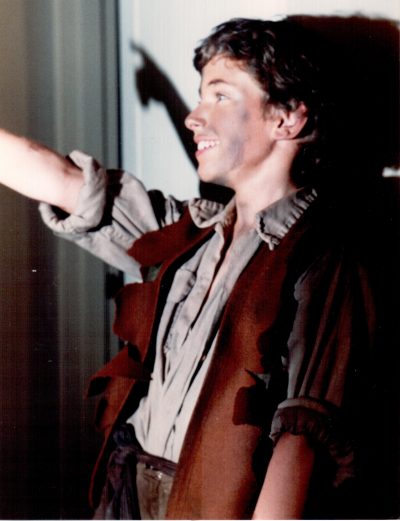
Mike, age 11, in
San Francisco Opera’s production of Bizet’s Carmen
How I got there
I started piano at six and sang with the San Francisco Boys Chorus until thirteen — Carmen and Boris Godunov with San Francisco Opera, three international tours, a performance for the Queen during her visit to San Francisco. Choristers don’t get to be approximate. You learn early that pitch, rhythm and diction are one thing, not three.
After high school I studied solfège privately: sight-singing and ear-training at a level where notation stops being symbols and becomes sound in your head before you play it. Two years in the San Francisco Symphony Chorus put me under Herbert Blomstedt, Valery Gergiev and Michael Tilson Thomas, which was less about performing well and more about watching how serious musicians prepare a piece from the first rehearsal forward.
The recording years
I wanted to know how a piano gets captured on a record. That curiosity became a career. I taught myself audio production and worked as a dialogue editor and re-recording mix engineer at Downpat Music, later recording for the Piano For Film library — cues heard in commercials, TV shows and films worldwide.
Mixing dialogue is the practice of hearing flaws nobody else can locate: a breath out of place, a syllable a millisecond early, a room tone that doesn’t match. It rewired how I listen to myself at the keyboard. I could suddenly hear where a phrase lost its shape, which is exactly what I teach students to do.
Teaching now
I work with adults who have played before and want to get serious again — people returning after years away, or continuing studies they never finished. If that sounds like you, schedule an introductory consultation. Bring a piece you’re working on, or one you wish you could play.
To learn more about studying with me and some of the FAQs, visit the lessons page.